12th Grade course
12th Grade Government: Democracy and Dictatorship Around the World
The American system is one of many ways people have organized power.
17 lessonsabout 2 hours in allBeginnerFree
Lessons of 5 to 10 minutes, taught by Milo, your AI tutor. In your browser now; phone apps soon.

By the end you can
- Learners can compare major political systems, ideologies and structures, including monarchies, presidential systems, parliamentary systems and different distributions of power
- They can explain how dictators and revolutionary movements gain and retain power, and identify tools such as coups, censorship, rigged elections and one-party rule
- They can describe how authoritarian systems transition toward democracy and identify conditions that help democratic systems endure
What you'll learn, lesson by lesson
- 1Feudalism and MercantilismExplain how feudalism tied land to loyalty and how mercantilism used trade to build royal power.
- 2Socialism, Communism and FascismCompare how socialism, communism and fascism treat property, the economy and individual rights.
- 3Monarchy and Liberal DemocracyDistinguish absolute from constitutional monarchy, using Saudi Arabia and the United Kingdom.
- That's a preview. 14 more lessons follow.
Take all 17 lessons free in the Milo app, with Milo teaching each one.
Start this course free - 4Presidents and Prime Ministers
- 5Gladstone and Thatcher
- 6Federal, Confederal and Unitary
- 7Italy, 1922
- 8Cambodia, 1975–1979
- 9Tools of Illegitimate Power
- 10Three Dictators
- 11Independence Revolutions
- 12The Mexican Revolution
- 13Cuba and Nicaragua
- 14How Communism Kept Control
- 151989 in Central Europe
- 16South Africa and South Korea
- 17What Sustains Democracy?
Inside the app
Not a video. A tutor who teaches you.
Milo explains each idea of 12th Grade Government: Democracy and Dictatorship Around the World out loud and on the blackboard, checks you understood, and coaches you when you slip. Lessons take 5 to 10 minutes.
Start free
More in 12th Grade
See all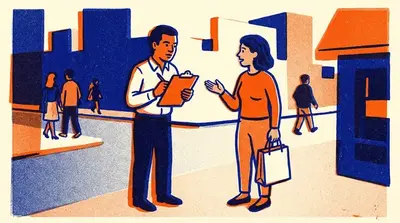
12th Grade
12th Grade Math: Statistics 2: Data, Sampling and Inference
15 lessonsBeginner
12th Grade
12th Grade English: Technical Explainers Built From Research
16 lessonsBeginner
12th Grade
12th Grade Math: Precalculus 2: Trigonometry and the Complex Plane
16 lessonsBeginner

12th Grade
12th Grade Government: Civil Society, Life Outside Government
10 lessonsBeginner
Free to learn
This course is free. So is Milo's help planning it.
Every course in Milo's library, your growth plan and Milo's weekly check-ins cost nothing. Members, from $5 a month, also get lessons written just for them.
- Can I really start for free?
- Yes. No card needed.
- Can I cancel a membership any time?
- Yes, from your account. You keep it until the end of the month you paid for.
- Where does it work?
- In any browser on a phone, tablet or computer. Phone apps are on the way.