11th Grade course
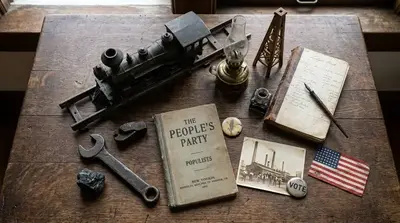
11th Grade US History: The Gilded Age 2: Trusts, Populists and Progressives
By 1900 a handful of companies controlled oil, steel and railroads, and the United States had become the world's largest industrial economy.
16 lessonsabout 2 hours in allBeginnerFree
Lessons of 5 to 10 minutes, taught by Milo, your AI tutor. In your browser now; phone apps soon.
By the end you can
- You can explain how industrial consolidation, corporate power, and natural resources helped the united states become the leading industrial economy by 1900
- You can compare competing explanations of poverty and summarize farmer, populist, and reform responses to economic and political problems
- You can describe how antitrust laws, railroad regulation, presidential action, and the sixteenth amendment expanded government oversight of industry
What you'll learn, lesson by lesson
- 1From Competition to CombinationExplain how price wars pushed companies to combine into pools, trusts and holding companies.
- 2Standard OilDescribe how Rockefeller's Standard Oil used a trust to control about 90 percent of U.S. oil refining.
- 3Morgan and the BankersExplain how J. P. Morgan built U.S. Steel in 1901 and why bankers gained power over industry.
- That's a preview. 13 more lessons follow.
Take all 16 lessons free in the Milo app, with Milo teaching each one.
Start this course free - 4The Sherman Antitrust Act
- 5Land Rich in Resources
- 6Number One by 1900
- 7Social Darwinism
- 8The Social Gospel
- 9Comparing the Two
- 10Farmers in Trouble
- 11The Omaha Platform and 1896
- 12The Populist Legacy
- 13Who the Progressives Were
- 14Theodore Roosevelt's Square Deal
- 15Hiram Johnson's California
- 16New Federal Tools
Inside the app
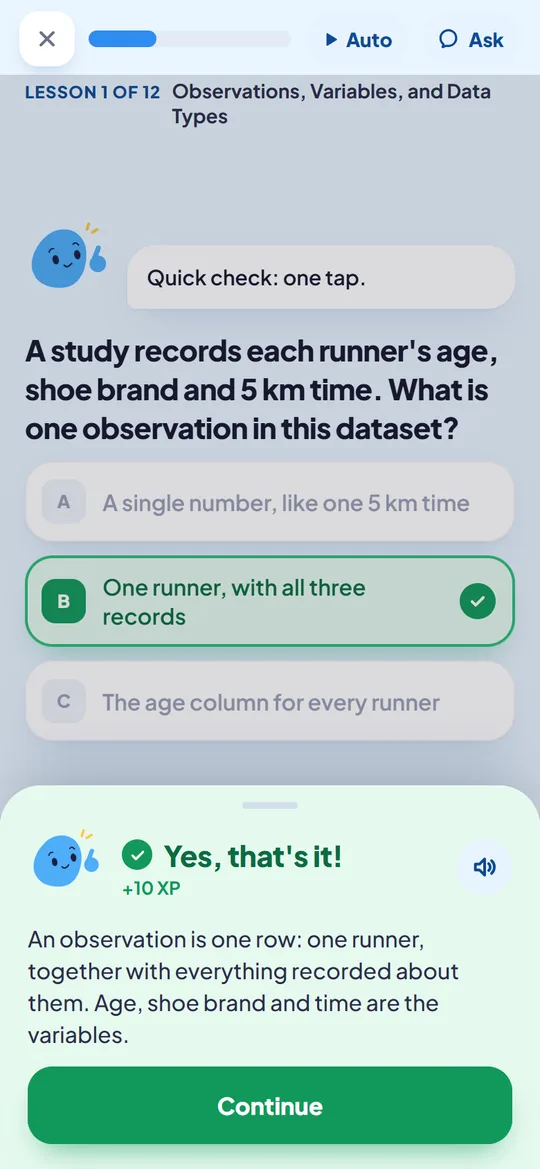
Not a video. A tutor who teaches you.
Milo explains each idea of 11th Grade US History: The Gilded Age 2: Trusts, Populists and Progressives out loud and on the blackboard, checks you understood, and coaches you when you slip. Lessons take 5 to 10 minutes.
Start free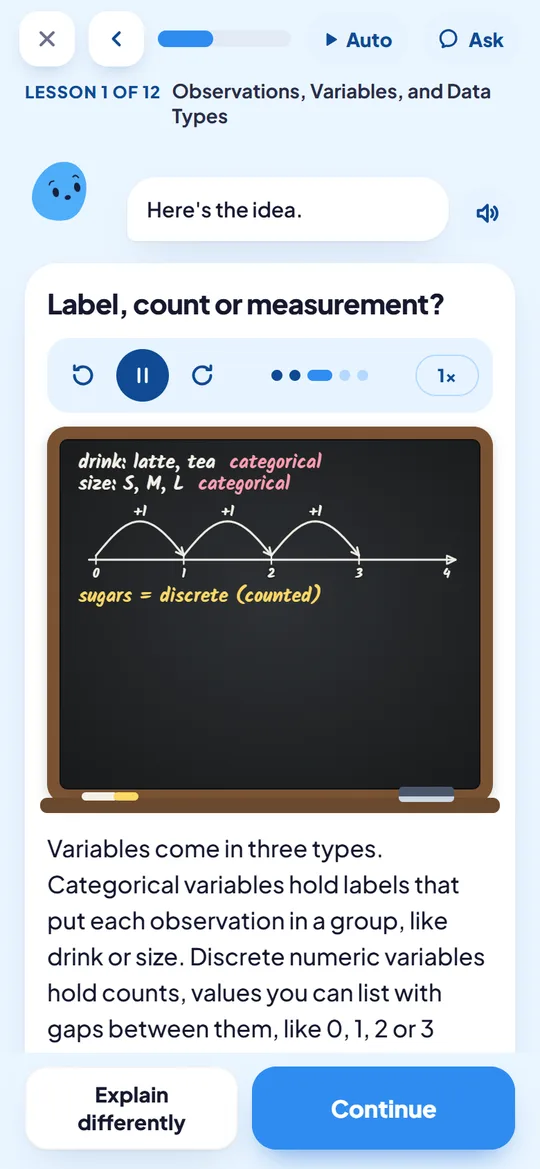
More in 11th Grade
See all
11th Grade
11th Grade Math: Algebra II 3: Exponential and Logarithmic Functions
17 lessonsBeginner

11th Grade
11th Grade US History: Cold War America 1: Containment from Berlin to Cuba
16 lessonsBeginner
11th Grade
11th Grade Math: Algebra II 4: Trigonometric Functions
14 lessonsBeginner
11th Grade
11th Grade English: Founding Words and Fiery Speeches in American Nonfiction
18 lessonsBeginner
Free to learn
This course is free. So is Milo's help planning it.
Every course in Milo's library, your growth plan and Milo's weekly check-ins cost nothing. Members, from $5 a month, also get lessons written just for them.
- Can I really start for free?
- Yes. No card needed.
- Can I cancel a membership any time?
- Yes, from your account. You keep it until the end of the month you paid for.
- Where does it work?
- In any browser on a phone, tablet or computer. Phone apps are on the way.